 This is very much a ‘late’ report, but only now, some weeks after the event, have I managed to scrounge any free time to write up some notes on what a delightful time we had going out to Ballykilcavan to help out with their hop picking effort. But first, some context for those outside Ireland would likely be helpful. I became an immediate fan of Ballykilcavan’s beer when we moved to Ireland, thanks to a combination of simply excellent beer and beautifully-considered branding that reflects the history of the farm where the brewery sits; it’s been in the Walsh family since 1639, and the complex of buildings represent many eras of agricultural change. The farm’s chief crop these days is barley, and while much of that goes on to become Irish whiskey, some of the malted barley also comes back to the farm to turn into beer, made in the brewery in the former grainstore, built c. 1780.
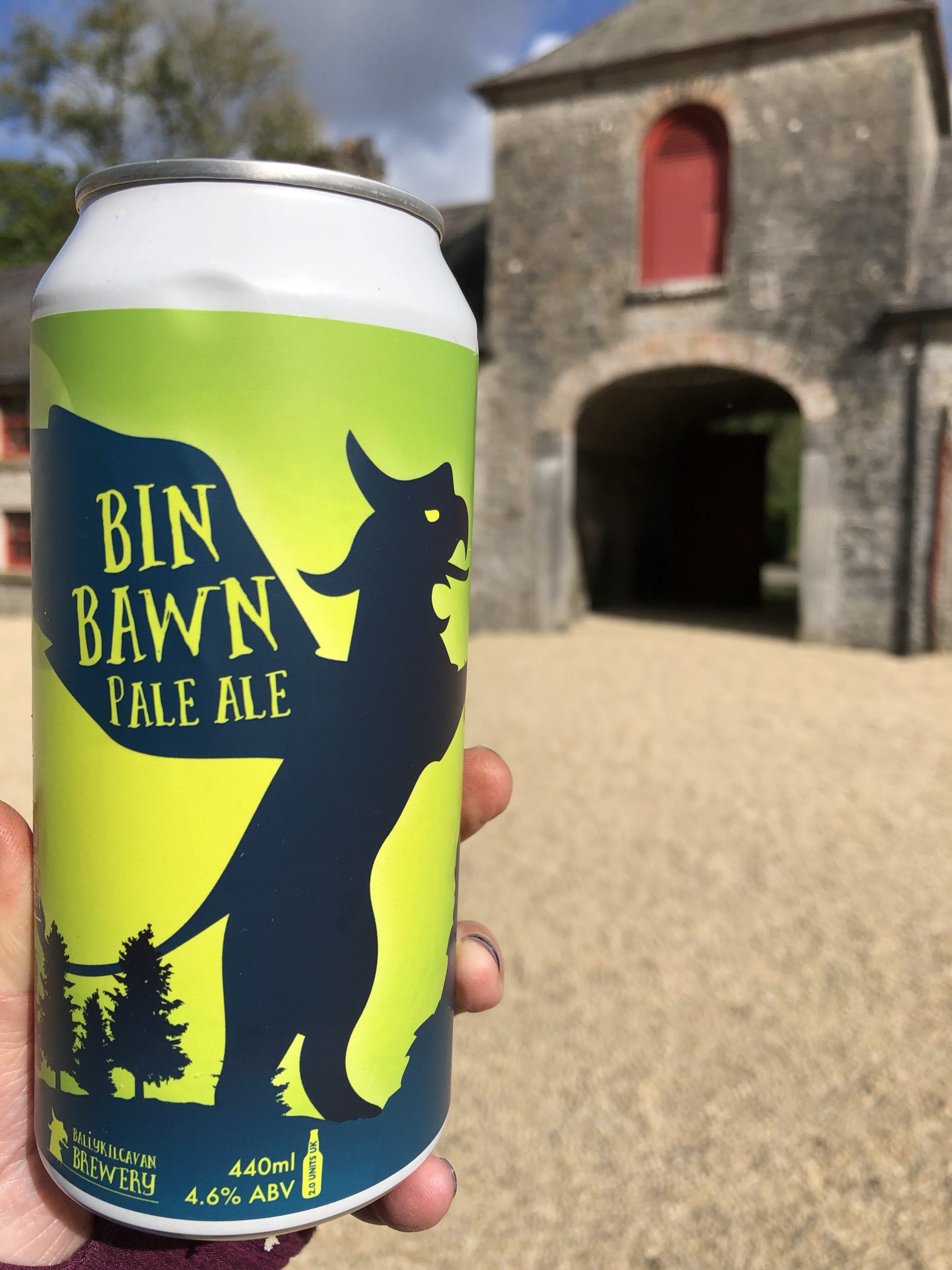
I scrolled back in my Untappd history to determine my first Ballykilcavan beer, and was not surprised to discover that it was Bambrick’s Brown Ale, on Valentine’s Day of 2020, so, pre-lockdown, but as a brown ale nerd, very much on brand for me. In October of 2020, we attended a virtual tour of the brewery with the Ladies Craft Beer Society of Ireland. which gave a bit of of a window into operations, and I was hooked. My interest was further piqued by a great episode of A New Brew, which offered a deep dive into the history of the farm, why it made sense to open a brewery there, and some of the challenges and opportunities still to come. And while I absolutely adore the Bambrick’s Brown – indeed, I try to always have at least a few in my fridge – I’ve also come to really enjoy the Brickyard Red, as well as last year’s Fresh Hop Pale Ale; Bin Bawn Pale Ale has also become a household staple. The one-off Clancy’s Cans series always brings something interesting and different, and the other core range beers are consistently superb.
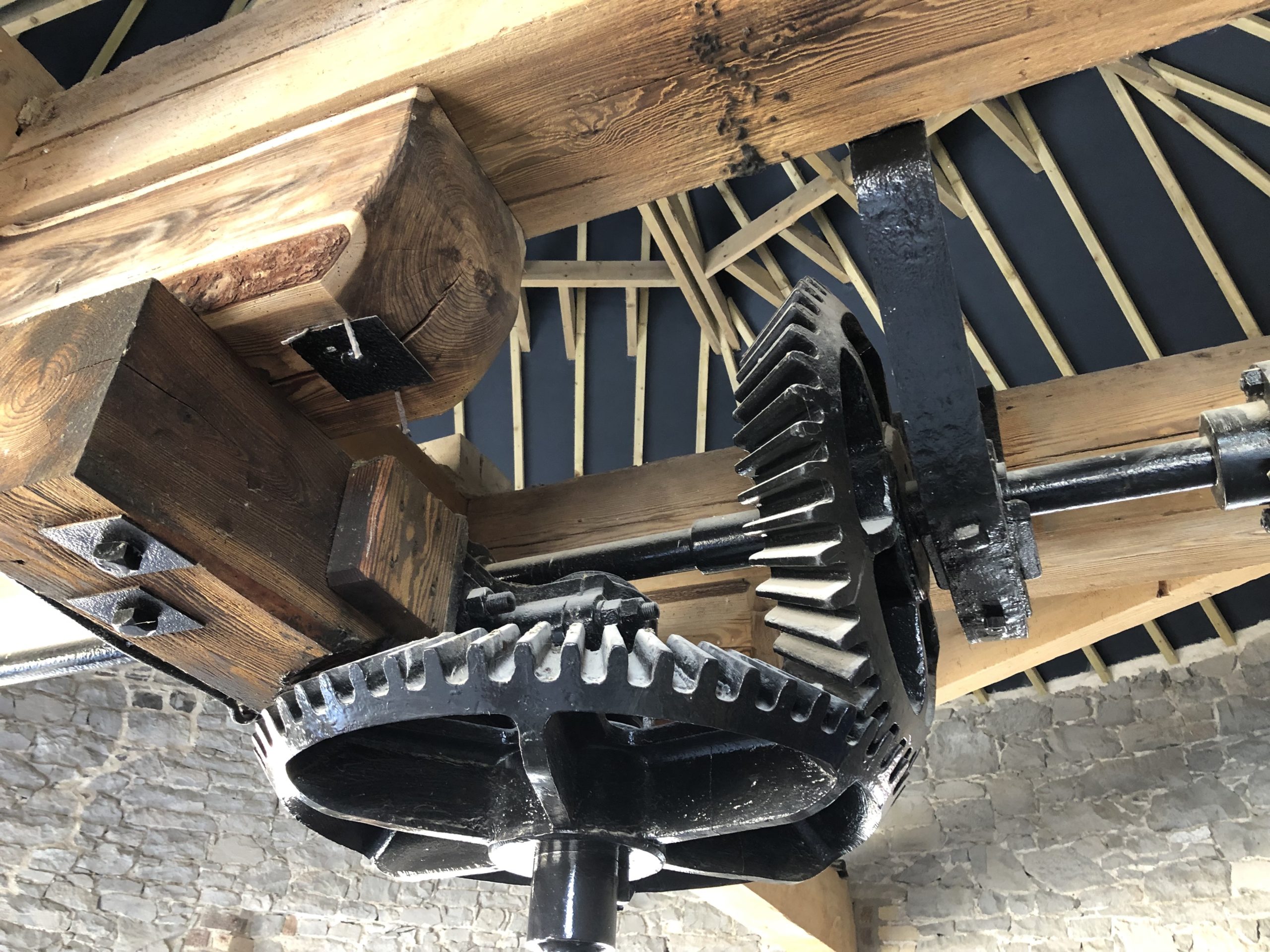
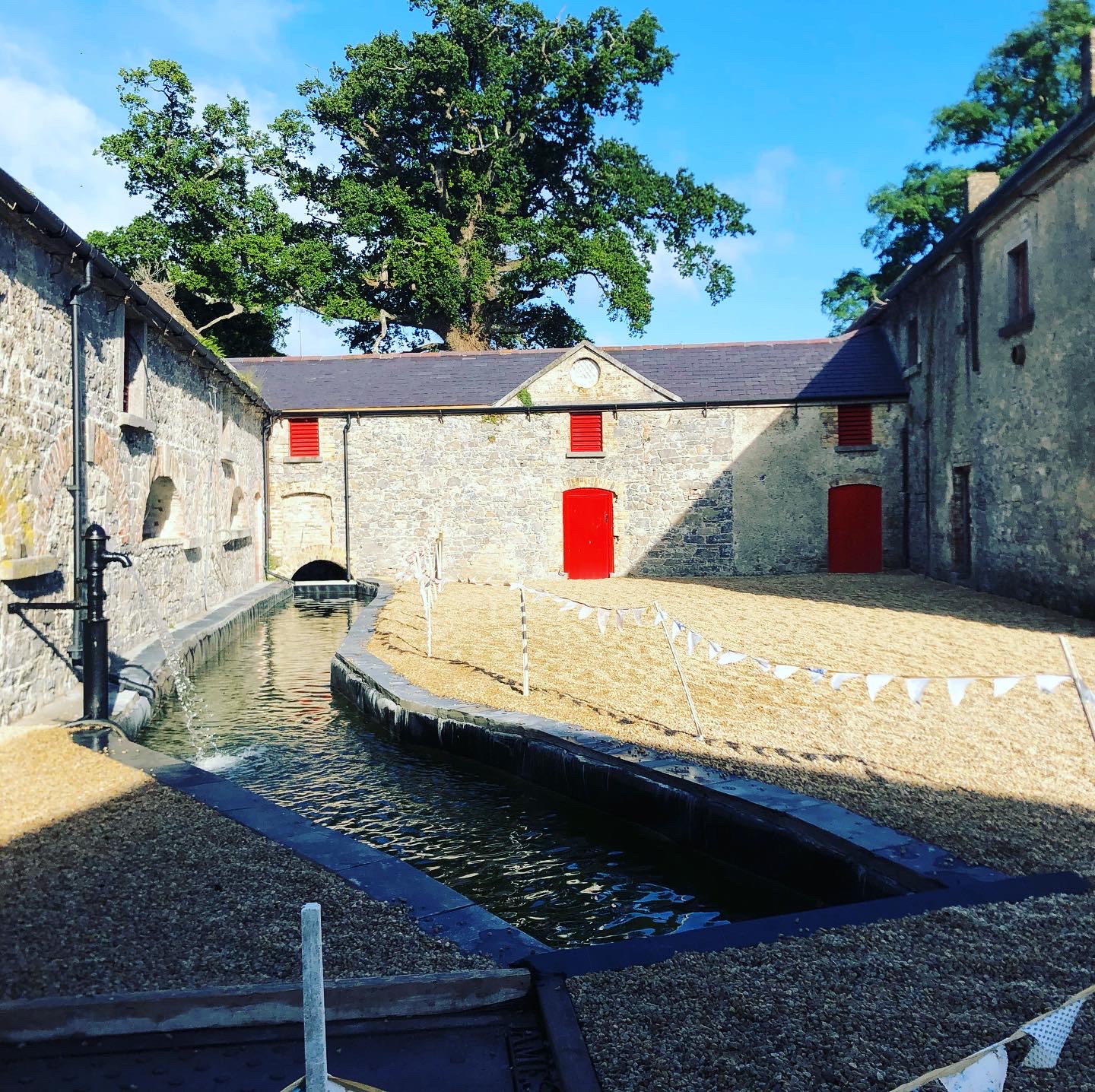 So I was thrilled to get the opportunity to visit the farm, and was very grateful to my frequent Beer Ladies Podcast co-host, Bean, for giving us a lift there – rural Ireland does not have the best public transit, although it would be theoretically possibly to get a train from Dublin to Stradbally and hop in a taxi from there. We were greeted by owners Dave and Lisa Walsh-Kemmis (as well as assorted pets and children – proper working farm, after all) and had a bit of time to wander the often beautifully-restored farm buildings; I maintain that no brewery has a stronger Instagram game. We were fortified for the hop-picking effort with some good tea and biscuits, and we duly headed out to look at the hops.
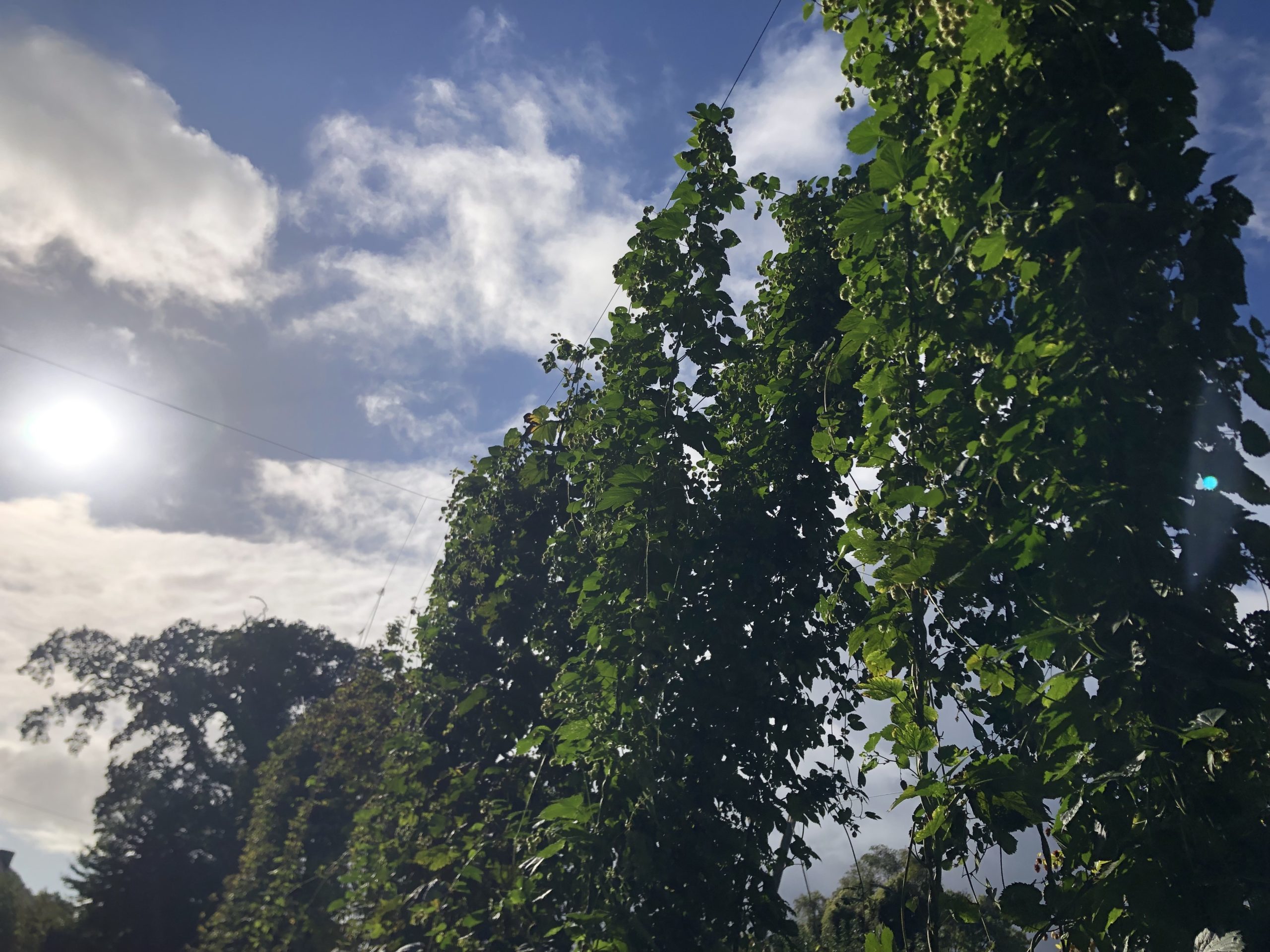 Now, we are not talking about acres and acres of hops, given that Irish weather is not conducive to predictable hop-growing (AS I AM SURE YOU ARE ALL AWARE FROM LISTENING TO OUR RECENT HOPS 101 PODCAST). One of the great perks of our years of living in the Pacific Northwest was the huge variety of fresh hopped beers that appeared every autumn, and there is certainly no equivalent to the (welcome) annual flood of those beers. Indeed, we only needed to harvest a relatively small area, where a mixture of Cascades, Citra, and a few other varieties were growing. But we quickly got stuck in, filling buckets by hand, and we were very fortunate with the weather – it only threatened to rain very briefly. Once picked, the hops went directly into the kettle.
 We were kept well-fed and watered, too – I finally got to meet Internet Friend Kate O’Driscoll, who had crafted gorgeous meat/cheese/truffles boxes for us, and it was wonderful to have a chat, both with Kate (whose husband, Joe, is the head brewer at Ballykilcavan) as well as with so many other people I’ve only previously ‘met’ on Irish Beer Twitter. (Side note when it comes to conversations: I got some great suggestions from Lisa on shoes, as she seems to share my interest in barefoot/foot-shaped shoes and was equally annoyed a brand we had both liked in the past had declined in quality, and I should be receiving some shoes I ordered on her recommendation shortly – can’t wait. Bonus!). I naturally grabbed a few Bambrick’s Browns to take home, and once we ensured the boil was underway, we headed back to Dublin.
So, while we only played a small part in its creation, I will be keeping an extra-special eye out for this year’s Fresh Hop Pale Ale. And when Ballykilcavan’s visitor centre opens in the not-too-distant future, it will be a must-visit – a perfect excuse to go back.